
Last Updated: November 12, 2026
Quick Summary
Professional grade running gear is apparel and accessories built with named fabrics, traceable construction, movement-first fit, and explicit care instructions that hold up under daily training loads. At Lilac City Running Company we judge gear against those four markers instead of marketing language. Every brand should pass the same checklist before you spend.
- A pro-grade shirt names its fabric source and weight, like the 4.3-ounce Italian Borgini mesh in the Pinnacle Tee.
- The Pinnacle Tee Shirt costs $74.99 and is printed, sewn, and manufactured in Spokane, Washington.
- The Harrier Running Singlet is 100% polyester at $54.99, built for hot and race days.
- Measure your feet late in the day and use the larger foot's measurement as your baseline.
- A discounted shirt that does not fit costs more than a full-price one you wear weekly.
Table of Contents
- What Professional Grade Running Gear Actually Means
- How to Find the Perfect Running Shoe Fit
- High-End Running Apparel That Earns Its Price
- Best Running Gear Brands and How to Judge Them
- Running Gear for Road, Trail, and Every Weather Condition
- How to Time a Running Gear Sale Without Settling for Seconds
- Build Your Kit at Lilac City Running Company
- Frequently Asked Questions
What Professional Grade Running Gear Actually Means
Professional grade running gear is apparel and accessories built with materials, construction, and fit standards that hold up under daily training loads rather than occasional use.
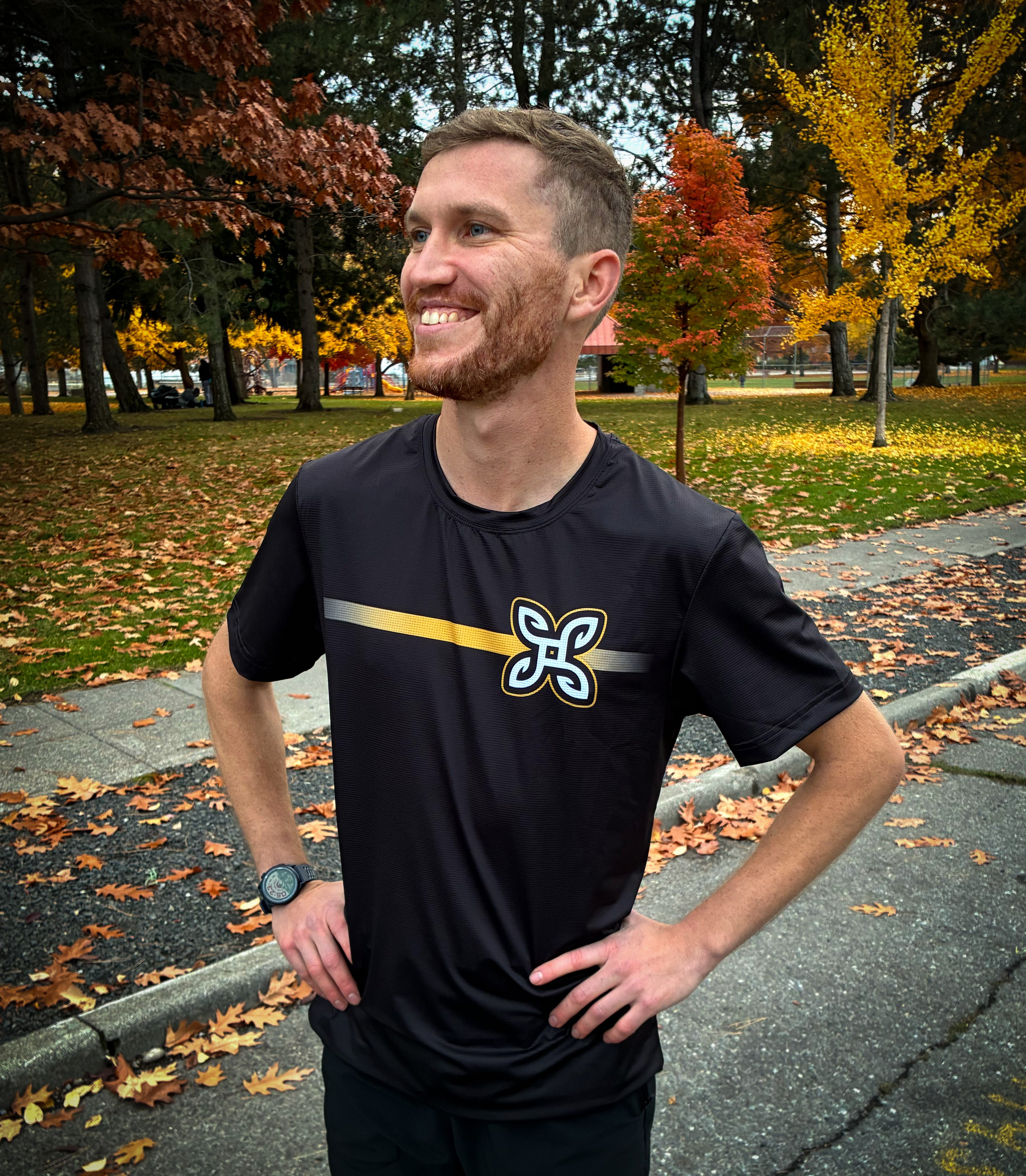
The first marker is fabric specification. A pro-grade shirt names its fabric source and weight, like the Italian Borgini mesh used in our Pinnacle Tee, which comes in at 4.3 ounces in an XL.
The second is construction origin. Where a garment is printed, sewn, and finished tells you who is accountable for the seams. The third is fit intent: an athletic cut designed for movement, not a boxy shape that bunches at the shoulders. The fourth is care honesty.
The Four Markers That Separate Pro Gear From Pretenders
- Named fabric and weight: you can look up the mill and the ounces per garment
- Traceable construction: printed, sewn, and manufactured in a stated location
- Movement-first fit: athletic cut, tested across body types
- Explicit care instructions: temperature, softener rules, drying guidance

How to Find the Perfect Running Shoe Fit
The perfect running shoe fit leaves roughly a thumb's width of space between your longest toe and the front of the shoe, with no heel slip and no pressure across the widest part of your foot.
Measure your feet late in the day, when swelling peaks. Stand on a sheet of paper against a wall, mark your longest toe, and measure heel to mark for both feet. Use the larger number. If you order online, check the brand's own sizing chart rather than assuming your casual shoe size carries over.
Measuring at Home Before You Order
- Trace both feet on paper while standing, late in the day
- Measure heel to longest toe in centimeters for each foot
- Use the larger foot's measurement as your baseline
- Compare against the specific brand's size chart, not a generic conversion
- Confirm the return window before you order
High-End Running Apparel That Earns Its Price
High-end running apparel earns its price when the fabric, seams, and fit survive a full training block without pilling, stretching, or losing shape. Price alone proves nothing. A $75 shirt is only expensive if it fails in month three.
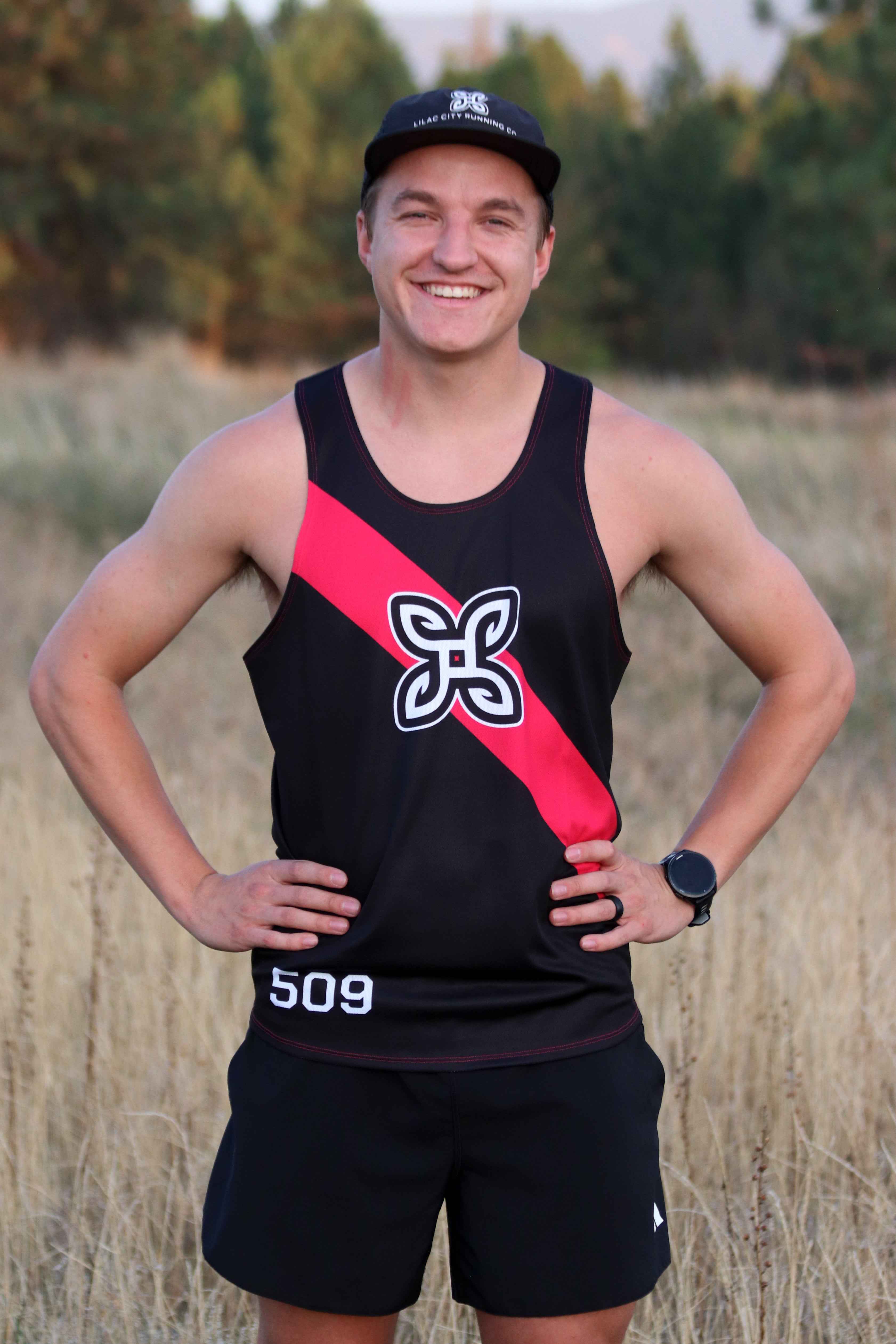
Our Pinnacle Tee Shirt in Black and Yellow is a clear example of the approach. The Harrier Running Singlet in Black and Fiery Fuchsia takes a different approach: retro sash design, contrasting edge stitching, and a 509 graphic modeled on old school uniform numbers, all in 100% polyester at $54.99.
How We Judge Whether a Garment Earns Its Price
Apparel value often comes down to a few measurable things, and you can check them before you buy:
- Fabric weight and source: a named mill and a stated weight in ounces per garment let you compare like with like. Vague "premium blend" language hides the one number that predicts how a fabric drapes, breathes, and holds shape.
- Seam construction: flat, contrasting stitching that stays put after repeated washing is the real durability signal. Look at the shoulder and side seams first, since those take the most strain.
- Fit retention: an athletic cut should not bag at the shoulders or ride up at the hem after a season of washing. Ask whether the brand publishes care guidance specific to the fabric.
- Repairability and replacement: a garment with a stated care routine and a reachable team behind it is easier to keep in rotation than one you throw away when a seam goes.
Cost per Use, Side by Side
A simple comparison makes the value case concrete. Take three tops at different price points and compare them on expected lifespan and replacement frequency rather than sticker price:
| Garment | Upfront Price | Realistic Lifespan | Replacement Frequency | Practical Read |
|---|---|---|---|---|
| Pinnacle Tee (named Borgini mesh, stated construction) | $74.99 | Two or more seasons of regular training | Rare | Higher upfront, lowest per-wear cost if cared for |
| Harrier Singlet (100% polyester, race-focused) | $54.99 | Multiple race seasons | Occasional | Lower upfront, built for hot and race days |
| Generic "premium blend" top | Often $40 to $60 | One season or less | Twice a year | Cheapest at checkout, most expensive per run |
The pattern most runners miss is that the cheapest shirt at checkout is frequently the most expensive per run, because it gets replaced twice as often. A discounted shirt that does not fit costs more than a full-price one you wear weekly.
High-end running apparel is often judged at the seams first. Flat, contrasting stitching that stays put through repeated washing is a useful signal, not the logo.

Upfront Prices of Running Tops Compared
Best Running Gear Brands and How to Judge Them
The best running gear brands are the ones that tell you what their fabric is, where the garment was made, and how to care for it, and then let you verify it. Everything else is branding. When you shop professional grade running gear, run every brand through the same short checklist before you spend, and treat the checklist as a test you can actually perform rather than a vibe you get from a homepage.
A Testing Method You Can Repeat
Most gear guides tell you what they liked. Fewer tell you how they decided. A repeatable method matters because it lets you compare brands on the same terms instead of trusting a single reviewer's taste. A practical approach runs like this:
- Define the use case first. Road, trail, training, and racing ask different things of a garment. Judge a race singlet on airflow and weight, and a training tee on durability and fit retention. Comparing across use cases is how bad recommendations happen.
- Test across runner profiles. A garment that works for one body type may bind at the shoulders for another. Note the runner's build, typical distance, and climate so the result transfers to your situation.
- Repeat the conditions. Wear the same piece on comparable runs, in comparable weather, and wash it the same way between wears. Repeatability is what separates a real finding from a first-impression review.
- Check the seams and care label, not just the feel. Fabric weight, seam type, and stated washing temperature are the durable signals. A garment that names its mill and weight is easier to evaluate than one that does not.
Fit and Sizing Across Brands
Fit is where brand comparisons most often fall apart, because sizing is not standardized. A common pattern is for a brand's "medium" to run a half size small relative to casual apparel, which is why runners end up with blackened toenails and tight shoulders. Two practical habits reduce the risk:
- Measure, then compare to the brand's own chart. Trace both feet late in the day and use the larger measurement as your baseline. For apparel, check the brand's size chart rather than a generic conversion, and read any note about women sizing down in men's-cut pieces.
- Confirm the return window before ordering. A brand that publishes specific fit guidance and a clear return path is easier to buy from than one that hides behind a generic chart.
The Brand Checklist, With Strong and Weak Signals
| What to Check | Weak Signal | Strong Signal |
|---|---|---|
| Fabric | "Premium blend" | Named mill and weight in ounces |
| Construction | "Imported" | City and country of printing and sewing |
| Fit guidance | Generic size chart | Specific advice, including women sizing down |
| Care | "Machine wash" | Temperature, softener rules, drying method |
| Accountability | No contact path | Named team reachable about fit issues |
| Testing | Star rating only | Stated conditions, runner profiles, repeatability |
Finally, weigh local accountability. A brand that prints and sews in a stated city has a shorter chain between the person who made the garment and the person who answers your email about it, and that shorter chain is usually visible in how specifically the brand talks about fabric and fit. Watch out: treating a star rating as evidence of quality, without knowing the conditions and runner profiles behind it, is the fastest way to buy gear that disappoints on your first long run.
Running Gear for Road, Trail, and Every Weather Condition
Road and trail running ask different things of your kit, and weather decides the rest. Road gear prioritizes breathability and low weight because pavement is predictable. Trail gear adds coverage and durability for brush, rocks, and variable footing.
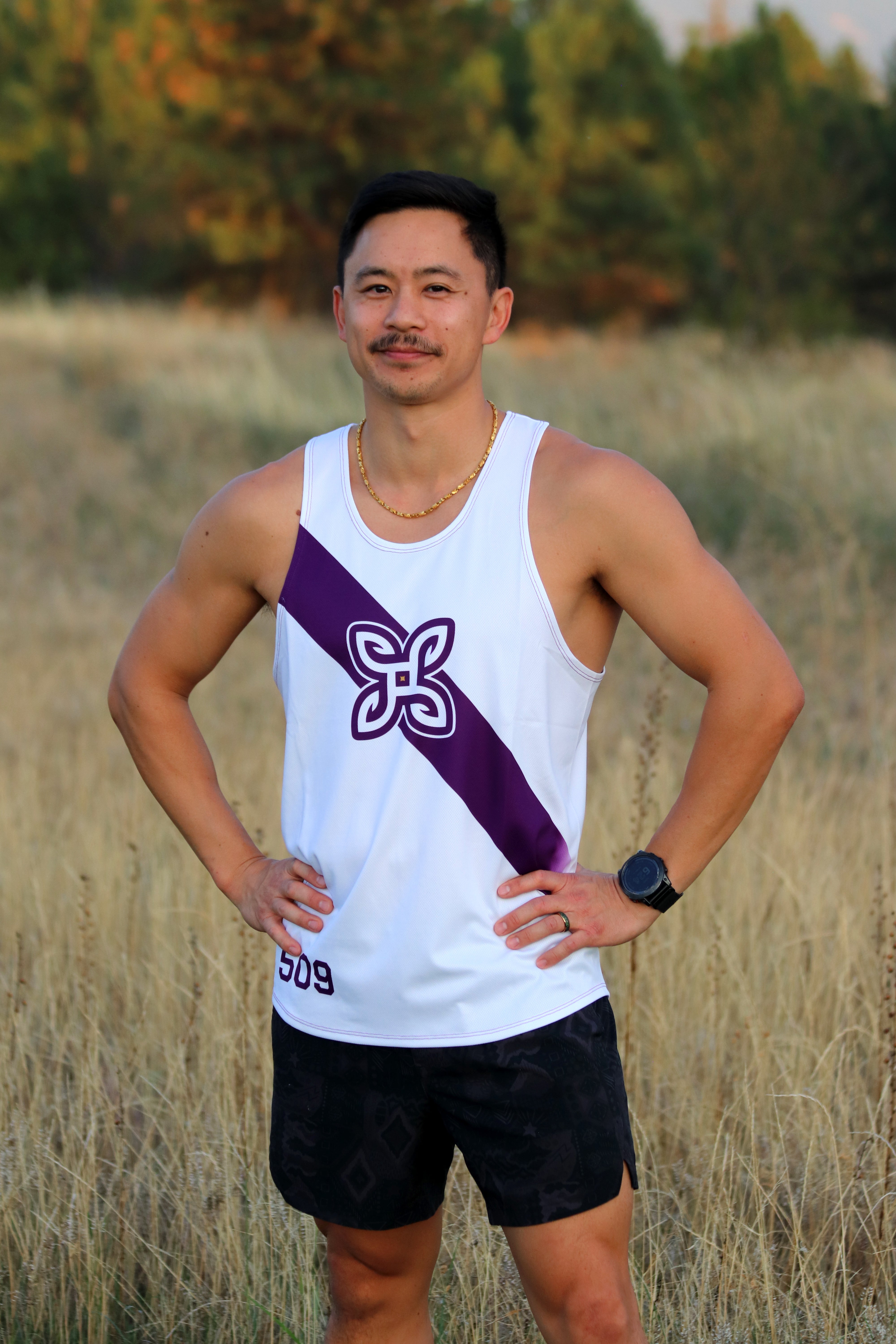
For warm conditions, a singlet like the Harrier in White and Deep Vino at $54.99 is built on a polyester construction. For sun and rain, the 935 Running Hat is made from ripstop polyester with a foldable foam bill and a woven nylon backstrap, adjustable one size fits all, at $34.99.
Layering logic matters more than brand names. Base layer against skin for moisture management, a light outer layer for wind, and a hat for sun or rain. In practice, this means three pieces cover most of the year.
How to Time a Running Gear Sale Without Settling for Seconds
The trap is buying a deal in the wrong size. A discounted shirt that does not fit costs more than a full-price one you wear weekly. If you are between sizes, size for the fit you need, not the discount.
Build Your Kit at Lilac City Running Company
Building a kit starts with one honest question: what do you actually run in, and what fails first? Replace that piece with something built to last, then add from there.
Our garments are designed by people with deep roots in the Spokane running community.
Start with the Pinnacle Tee for daily training, add a Harrier Singlet for race day, and finish with the 935 Hat for weather protection. Browse the full collection and start shopping to see current colors and sizing.
The hardest part of shopping professional grade running gear is trusting a smaller brand after being burned by gear that looked good and fell apart.
Frequently Asked Questions
What counts as professional-grade running gear?
Professional-grade running gear is built around four things: fabric and construction that survive repeated washing and long mileage, a fit designed for movement rather than looks, weight and breathability suited to hard efforts, and details like flat seams and moisture-wicking mesh. A 100% polyester mesh tee weighing about 4.3 ounces in an XL, sewn with an athletic cut, is a good benchmark. Price alone does not define it; how the piece performs on your third season of training does.
How should running shoes fit compared to everyday sneakers?
Leave roughly a thumb's width of space between your longest toe and the front of the shoe. Measure your foot late in the day, and check that the heel locks down without slipping.
Is expensive running gear worth it compared to budget options?
Work out cost per use. The $74.99 Pinnacle Tee is built from Italian Borgini mesh with an athletic cut and is printed, sewn, and manufactured in Spokane. Consider how long a garment will serve you when weighing its price.
How do I know high-end running apparel will fit when I order online?
Check whether the brand publishes a sizing chart and states the cut. Lilac City Running uses men's sizing with an athletic cut meant for both men and women, and recommends women size down one step (women's medium equals men's small). Measure against the chart and read the care and fabric notes before checkout.
What running gear do I need for road running versus trail running?
Road and trail running ask different things of your kit, and weather decides the rest. Layers you can adjust mid-run are useful across both.
