
Last Updated: November 17, 2026
Quick Summary
The best running layers for windy fall training are a three-part system: a moisture-wicking base layer, a thin mid layer that traps warmth, and a windproof shell you can vent. Dress for the second mile, so you feel slightly cool when you step outside.
- Use wind chill, not temperature alone, as your real starting point when picking layers.
- A light windbreaker over your base layer handles steady wind above roughly 10 mph.
- Add a hat and gloves before you add another shirt, since wind chill hits head and hands first.
- Cotton holds water and chills you, so choose synthetic polyester or wool instead.
- Women are recommended to size down, since a women's medium maps to a men's small.
Table of Contents
- Why Wind Changes Your Running Layers
- Running Layers by Temperature: A Wind-Adjusted Chart
- Base Layer: Fabric Choices That Move Sweat
- Mid Layer: Warmth Without the Bulk
- When You Need a Windproof Running Jacket
- Affordable Winter Running Gear That Still Performs
- Fall Running Gear Women Can Layer All Season
- Build Your Windy Fall Layering Kit
- Frequently Asked Questions
Why Wind Changes Your Running Layers
Wind is the variable most runners ignore, and it is the one that decides whether your fall run feels sharp or miserable. The best running layers for windy fall training are not simply warmer versions of your summer kit. Wind strips heat from exposed skin and pushes through loosely knit fabrics, so a calm 45°F morning and a windy 45°F morning demand different clothing.
The fix is a layering system, not a single heavy piece. Base layer moves sweat off your skin. Mid layer traps warmth. Outer layer blocks wind. Get those three working together and you can handle a gusty 40°F day without overheating on the tailwind sections.
Below, we break down how to choose each layer, how to adjust for wind chill, and which pieces we would put in our own kit.
Running Layers by Temperature: A Wind-Adjusted Chart
Temperature alone is a poor guide. A 40°F morning with 15 mph gusts feels closer to freezing than a still 40°F, so use wind chill as your real starting point. The chart below shows our general recommendation by condition, then we explain how to adjust it for effort, duration, and wind direction.
| Condition | Base Layer | Mid Layer | Outer Layer |
|---|---|---|---|
| 55-65°F, breezy | Short sleeve or singlet | None | Light vest if wind is steady |
| 45-55°F, windy | Long-sleeve top | Thin fleece or none | Windbreaker |
| 35-45°F, gusty | Long-sleeve top | Fleece or wool blend | Windproof running jacket |
| 25-35°F, cold wind | Heavy long-sleeve | Insulated mid layer | Windproof shell plus tights |
| Below 25°F | Heavy base plus tights | Insulated mid layer | Shell, hat, gloves |
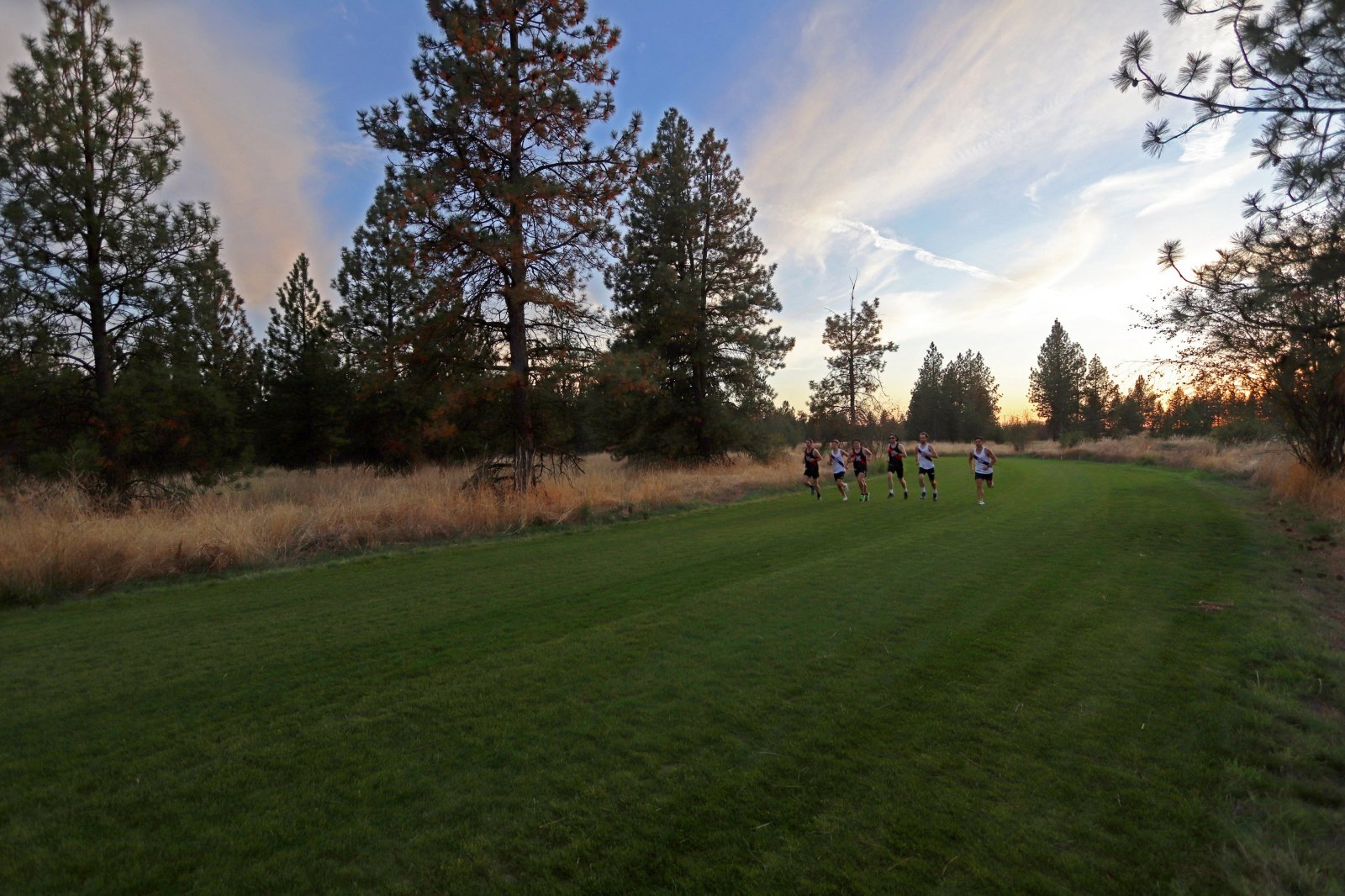
Dress for the second mile, not the first. You should feel slightly cool when you step outside. If you feel warm standing in your driveway, you are overdressing and you will be soaked by mile two.
The chart is a starting point, not a rule. Three variables move you up or down a row:
- Effort: Easy runs and long runs generate less heat per minute than intervals or tempo work, so you can wear one row warmer for easy efforts and one row cooler for hard efforts. A hard interval session in the 35-45°F row often means a base layer and a light windbreaker, not a fleece.
- Duration: A 20-minute shakeout does not need the same kit as a 90-minute long run. Short runs give you less time to build heat, so err warmer; long runs give you more time to overheat, so err cooler and plan to vent.
- Wind direction and exposure: An out-and-back into a headwind means the first half is colder and the second half is warmer. A loop through open fields or along a river exposes you more than a sheltered neighborhood route. If you cannot avoid exposure, add a shell you can unzip rather than a warmer mid layer you cannot remove.
A practical way to apply the chart is to pick your row, then adjust one variable at a time. Start with the temperature row, subtract a layer if you are doing a hard effort, add a shell if the wind is steady and you will be exposed, and add a hat and gloves before you add another shirt. Head and hands are where wind chill hits first, and they are the easiest pieces to remove mid-run.
Watch out: the chart assumes you are moving continuously. If your run includes standing rest, a group warm-up, or a long wait at a start line, add a removable outer layer you can shed once you are moving, because standing in the wind in your running kit drains heat fast.
Base Layer: Fabric Choices That Move Sweat
The best base layer is the one that pulls moisture away from your skin and keeps it there, not the thickest one. Moisture-wicking fabric does this by capillary action, spreading sweat across a wide surface so it evaporates fast. Cotton fails at this completely; it holds water, gets heavy, and chills you when the wind picks up.
Two fabric families dominate. Synthetic polyester dries quickly and holds its shape. Wool regulates temperature well and resists odor over multiple wears. In practice, most runners do best with a synthetic base for shorter, harder efforts and a wool blend for longer, cooler runs.
Our Pinnacle Running Tee is built on imported Italian Borgini mesh, a 100% polyester fabric that feels smooth against the skin and weighs 4.3 ounces in an XL. If you are weighing whether nicer fabric is worth the price, read our breakdown of whether durable workout clothes justify the cost.
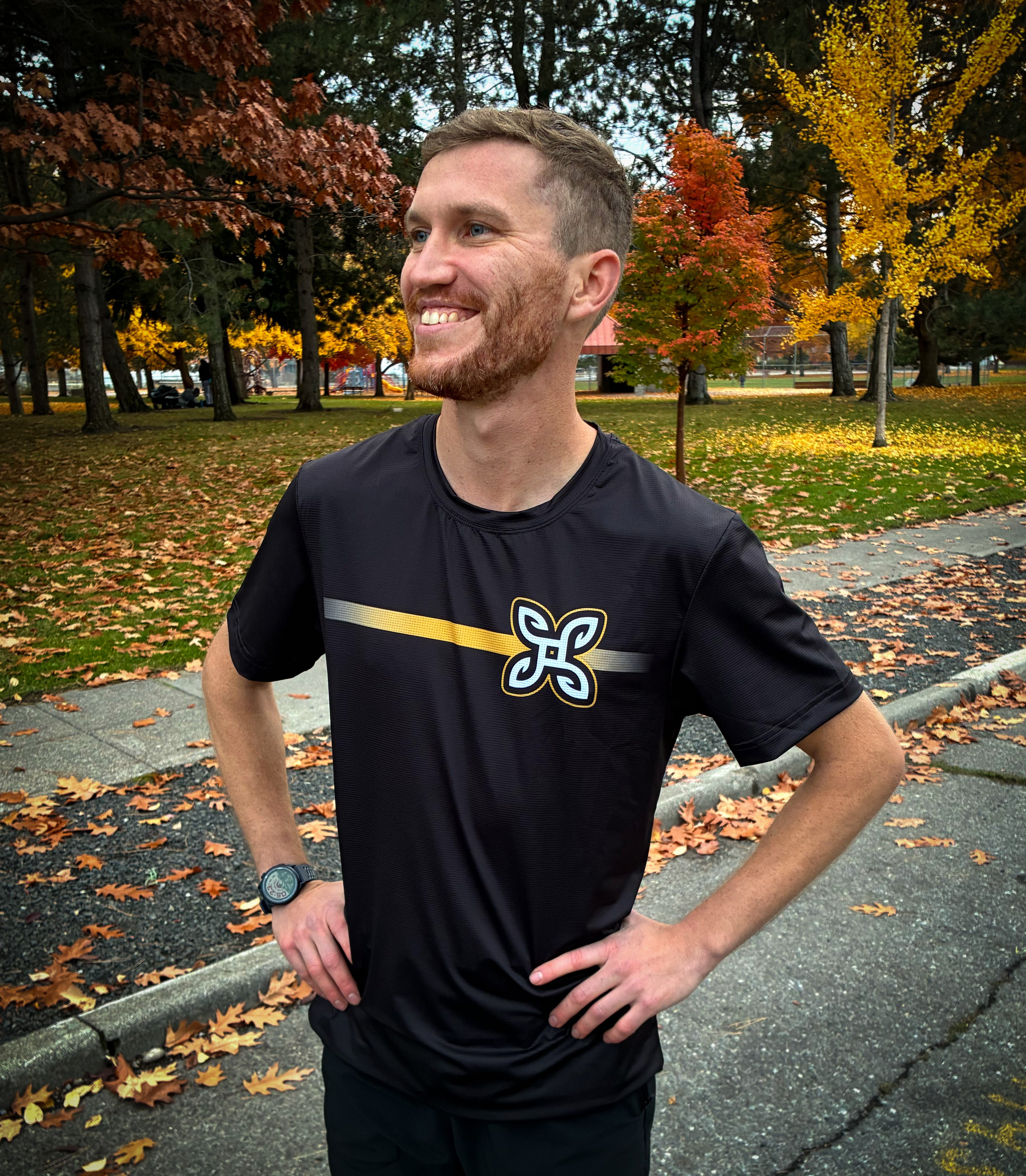
Watch out: the Pinnacle Running Tee care instructions say not to use softeners.
Mid Layer: Warmth Without the Bulk
A mid layer exists to trap body heat while letting vapor escape, and bulk is the enemy. Thin fleece, grid fleece, and lightweight wool blends do the job without turning you into a marshmallow. The test is simple: if you can't comfortably swing your arms across your chest, the mid layer is too thick for running.
Fit matters as much as fabric here. A mid layer should sit close to the base without compressing it, because compression flattens the air pockets that hold warmth. On gusty days we reach for a mid layer with a half zip, which lets you dump heat on climbs and seal up on exposed stretches.
For most fall training, one mid layer is enough. Add a second only when temperatures drop below freezing and the wind is steady.
When You Need a Windproof Running Jacket
A windproof running jacket earns its place when wind chill drops the effective temperature well below the reading on your phone.
Here is how to think about the decision:
- Steady wind above roughly 10 mph: a light windbreaker over your base layer. Below that threshold, a mid layer alone usually handles it.
- Gusts with temperatures under 45°F: a windproof jacket with a mid layer beneath. The shell handles the wind; the mid layer handles the temperature.
- Rain or drizzle in the forecast: a water-resistant shell, since wind and wet together drain heat fast. Water-resistant is not waterproof; a fully waterproof jacket often traps sweat on a hard effort.
- Short, hard efforts: skip the shell and accept being cool for the first mile. You generate heat quickly, and a shell you cannot vent becomes a sauna.
- Long, easy runs into a headwind: wear the shell from the start and plan to unzip on the tailwind return.
Wind direction deserves its own line in your decision. On an out-and-back route, you may run into the wind for the first half and with it for the second. A shell that feels right at the door can be too much once you turn around. The practical fix is a full front zip and pit zips, so you can dump heat without stopping to strip layers.

Affordable Winter Running Gear That Still Performs
You do not need to spend the most to train well through cold, windy months. Affordable winter running gear that still performs shares a few traits: it uses technical fabric rather than cotton, it fits close enough to trap warmth, and it has at least one adjustment point like a zip or a drawcord.
A few affordable moves that pay off:
- Buy one good windproof shell and wear it over everything.
- Add a headband and lightweight gloves before you add another shirt.
- Use a packable hat for ear coverage on gusty mornings.
Our 935 Running Hat is a lightweight, breathable six panel hat with a foldable foam bill, made of 100% ripstop polyester front and 100% polyester mesh.
Fall Running Gear Women Can Layer All Season
Fall running gear women can layer all season comes down to fit, not a separate product line. Our singlets and tees use men's sizing with a cut meant for both men and women, and women are recommended to size down for the best fit. A women's medium maps to a men's small.
That sizing note matters more in fall than summer, because layers stack. A base layer that fits perfectly alone can feel restrictive under a mid layer and shell. Size your base close to the body and give the outer layers the room.
Our Harrier Running Singlet is a polyester singlet with contrasting stitching along the edge seams.
Build Your Windy Fall Layering Kit
Start with the base, then add protection in the order the weather demands it. That is the whole strategy: a moisture-wicking base layer, a thin mid layer for warmth, and a windproof shell you can vent. Adjust on the run rather than guessing at the door.
If you are ready to put a kit together, our guide to shopping professional grade running gear with confidence walks through fit, fabric, and what to check before you order.
Windy fall training rewards preparation more than toughness. Build a layering system you can adjust mid-run, and gusty mornings stop being something you dread. Lilac City Running Company makes high-performance apparel for road and trail runners, including moisture-wicking tees built on Italian mesh fabric and lightweight, packable accessories designed for changing conditions. Get started with Lilac City Running Company and build a fall kit that keeps you training through the wind.
Frequently Asked Questions
What is the 3 layer rule for winter running?
The three-layer rule means a moisture-wicking base layer against your skin, an insulating mid layer for warmth, and a windproof or water-resistant outer shell. Each layer does one job: the base moves sweat away, the mid traps body heat, and the shell blocks wind chill. In windy fall conditions you can often drop the mid layer and run with just a base and shell, then add the mid back when temperatures drop below freezing.
How many running layers should you wear in 40 degree weather?
At 40 degrees Fahrenheit with wind, most runners do well with two or three running layers: a long-sleeve base layer, a light mid layer such as a fleece or vest, and a windproof shell if gusts are strong. If the wind is calm, skip the shell. Start slightly cool, because you will warm up within the first 10 minutes and overdressing leads to overheating and heavy, sweat-soaked fabric.
Do you need a windproof running jacket for fall training?
A windproof running jacket earns its place when wind chill drops the effective temperature by 10 degrees or more, or when gusts hit 15 mph and up. It blocks wind from stripping body heat while still letting moisture escape. On calm fall days a breathable long-sleeve top is enough. Look for a jacket with a full zip and vents so you can adjust on the run instead of sweating through it.
What fabric is best for a running base layer?
Merino wool and polyester synthetics are the two best base layer fabrics. Wool regulates temperature across a wide range and resists odor on multi-run weeks; synthetics dry faster and cost less. Avoid cotton, which holds sweat and gets heavy and cold. The Lilac City Pinnacle Tee is made of imported Italian Borgini mesh, a 100% polyester fabric that feels smooth and soft and weighs 4.3 ounces in an XL.
How do you keep your hands and ears warm on a windy run?
Cover the extremities first. A lightweight headband or running hat protects your ears from wind chill, and thin gloves or mittens keep fingers functional. The Lilac City 935 Hat is a lightweight, breathable six panel hat with a foldable foam bill. Add gloves when temperatures fall below 45 degrees, and stash them in a pocket if you warm up mid-run.
