
Last Updated: November 15, 2026
Quick Summary
Tracksmith vs Bandit comes down to style: Tracksmith leans toward classic, heritage styling, while Bandit brings a sharper streetwear look to technical running apparel. Neither wins outright, so your training volume, climate, and race-day look should decide it.
- Tracksmith styling is understated and heritage-inspired, while Bandit is streetwear-forward.
- Tracksmith fits trim and true to size; Bandit runs slightly boxier, so try tights before buying.
- Check flatlock seams at the armhole and side seam on tops, and the waistband and inner thigh on half tights.
- Wash technical kit cold, skip fabric softener, and air dry to protect moisture-wicking fibers.
- A $70 top worn three times a week for a 16-week block works out to about $1.46 per wear.
Table of Contents
- Tracksmith vs Bandit Running: The Quick Verdict
- Tracksmith Running Apparel: New England Prep Meets Marathon Training
- Bandit Running Quality: Performance Fabrics With a Streetwear Edge
- Fit and Sizing: How Tracksmith and Bandit Compare on the Body
- Durability, Care, and Cost Per Wear
- Tracksmith Alternatives Worth Trying: A Local Option Built in Spokane
- Shop Lilac City Running Company for Your Next Kit
- Frequently Asked Questions
Tracksmith vs Bandit Running: The Quick Verdict
If you are weighing Tracksmith vs Bandit for your next season of training, here is the short answer: Tracksmith leans toward classic styling, while Bandit brings a sharper streetwear look to technical running apparel. Runners often ask us to compare them, and the honest verdict is that neither wins outright. Your training volume, your climate, and how you want to look on the starting line should decide it.
Below, we break down fabric, fit, durability, and cost per wear so you can choose with confidence.
Tracksmith Running Apparel: New England Prep Meets Marathon Training
Where Tracksmith earns its reputation is consistency. Runners who want a running shirt or base layer that looks appropriate both on the road and at a coffee stop after a long run tend to stay loyal to the brand. The trade-off is that the styling rarely pushes boundaries, so if you want your race-day gear to stand out, Tracksmith can feel muted.
Bandit Running Quality: Performance Fabrics With a Streetwear Edge
REI's guide to choosing running apparel fabrics
Fit and Sizing: How Tracksmith and Bandit Compare on the Body
Fit is the single biggest reason runners return running apparel, and it is where most brand comparisons stop at "trim versus boxy." That is not enough to order confidently. Below is a practical, product-by-product way to think about fit across both brands, plus the measurements and body-shape notes that actually drive a sizing decision.
Start with the size chart, not the label. Sizing charts are not interchangeable across brands, so measure yourself and compare to the chart for each specific item. Measure your chest at the fullest point, your natural waist, and your hip at the widest point, then compare those numbers to the chart for the specific item, not to the size you wear in another brand.
Tops and singlets.
Half tights and shorts. This is where try-before-you-buy matters most. Check the inseam length on each product page, a one-inch difference changes where the hem sits on the thigh and how the short behaves at speed.
Women ordering men's-cut singlets. Sizing down one size is the usual starting point, because men's cuts carry extra length and width through the torso. Verify against the women's chart where the brand publishes one, and pay attention to armhole depth, which is the most common fit complaint when crossing cuts.
Body-shape notes. None of this is a quality issue, it is pattern design, and it is the reason two runners the same height and weight can need different sizes.
Watch out: ordering a full matching kit in one size without checking each item's chart, since sizing can vary by garment.
Durability, Care, and Cost Per Wear
Both brands sit at premium pricing, and the real question is cost per wear, not sticker price. Most comparisons stop at "premium brands last longer." Here is what actually happens to the fabric, the seams, and the math over a training season.
What we look for in construction. On singlets and tops, flatlock seams and bonded or reinforced stress points at the armhole and side seam are the first things to check, those are the spots that fail first under marathon training volume. On half tights, look at the waistband attachment and the inner-thigh seam, where friction and stretch combine. A well-made piece worn three times a week for a full season delivers far better value than a cheaper shirt that pills after a month.
Wash testing and care. Technical fabric from either brand holds up well when cared for properly: wash cold, skip the fabric softener, and air dry when you can. Softeners coat and break down moisture-wicking fibers, which is the most common mistake we see runners make with expensive kit. Turn garments inside out, close zippers, and wash technical kit separately from cotton to reduce pilling.
Cost per wear, with real math. Cost per wear is simply the price divided by the number of wears you realistically get. A $70 top worn three times a week for a 16-week training block is 48 wears, or about $1.46 per wear. The same top worn twice a week for a year is 104 wears, or about $0.67 per wear. The brand matters less than how often you actually reach for the piece, which is why fit and versatility drive value more than label.
What justifies a price difference. Fabric weight and hand-feel, seam construction, and pattern complexity (a half tight with a phone pocket and flatlock seams costs more to make than a plain short) explain most of the gap between tiers. Pay for the features you will use; skip the ones you will not.
Watch out: treating "premium" as a durability guarantee, a $90 singlet washed with fabric softener and dried on high heat will degrade faster than a well-cared-for mid-priced one.
| Factor | Tracksmith | Bandit | What It Means for You |
|---|---|---|---|
| Style | Heritage, understated | Streetwear-forward | Pick based on race-day look |
| Fit | Trim, true to size | Slightly boxier | Try before buying tights |
| Fabric focus | Moisture-wicking, classic | Bold graphics, technical | Both perform; style differs |
| Seams to inspect | Armhole, side seam | Waistband, inner thigh | Check before first wash |
| Care | Cold wash, air dry | Cold wash, air dry | Skip softener on both |
| Best for | Marathon training, road | Versatility, everyday wear | Match to your routine |
If you want a deeper take on whether pricier kit pays off, read our breakdown of whether durable workout clothes are worth the higher price.
Tracksmith Alternatives Worth Trying: A Local Option Built in Spokane
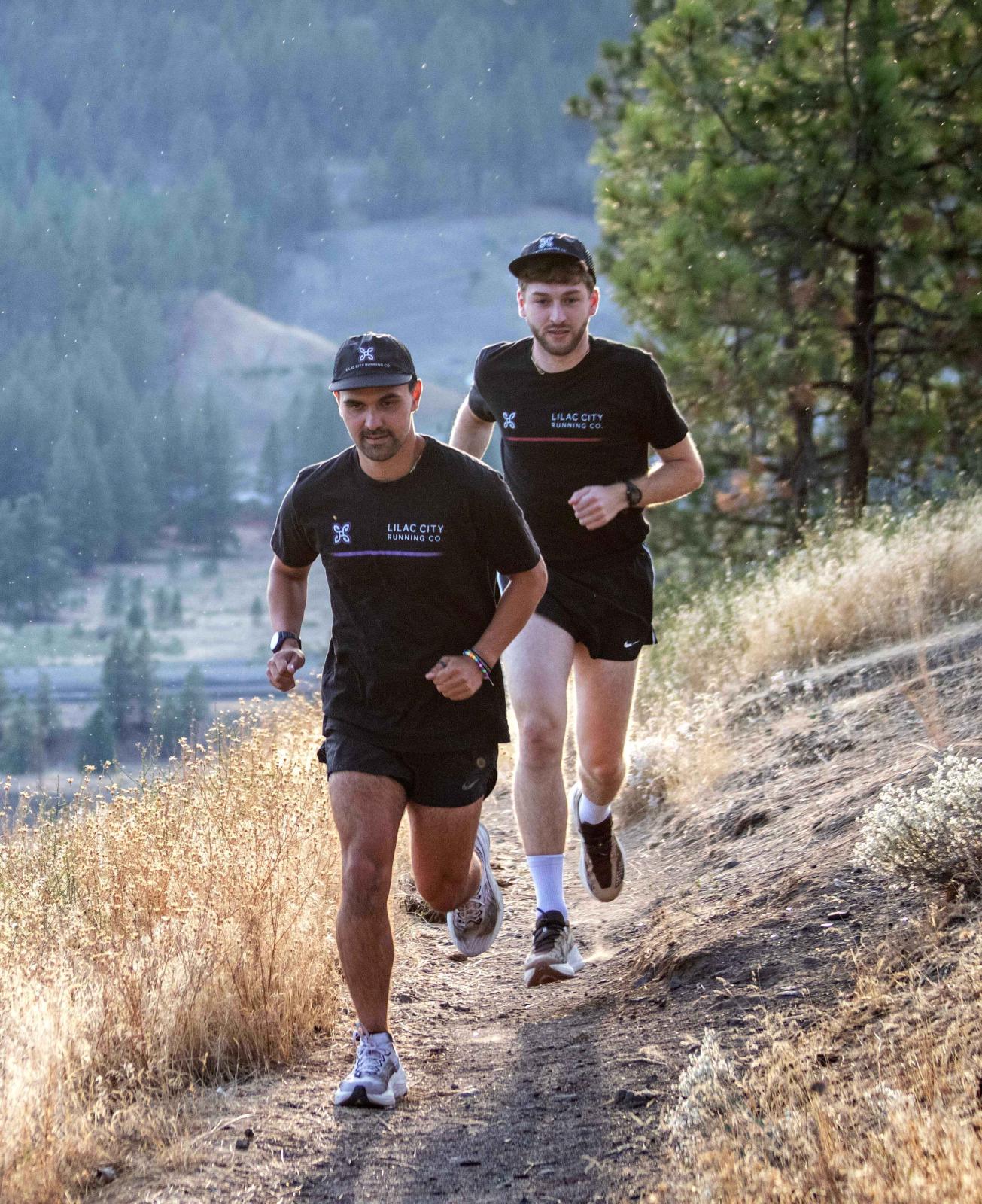
If you are looking for a local alternative, consider Lilac City Running Company. We build high-performance apparel for road and trail runners right here in Spokane, and our founder Andrew Kimpel brings a background as a former Team USA representative at the 2010 Junior World Cross Country Championships. That competitive pedigree shapes how we design kit for runners training for races like Bloomsday.
Our Harrier Running Singlet ($54.99) pairs old-school design with modern polyester construction, printed and sewn locally, with a retro sash and contrasting stitching. The Pinnacle Tee ($74.99) uses imported Italian Borgini mesh and is designed to be light and breathable. If you want to understand what drives us, read our mission rooted in performance, or browse our high-performance apparel to see the full lineup.
Shop Lilac City Running Company for Your Next Kit
Choosing between Tracksmith vs Bandit comes down to whether you want heritage styling or streetwear energy. Either way, the best gear is the gear that fits your body and your training. If you want a local option built by runners for runners, browse our full catalog of gear to build your next running kit, and shop professional-grade running gear with confidence. Our Harrier singlets and Pinnacle tees are designed for road and trail running.
The challenge is simple: stop guessing on fit and fabric, and start your next training block in gear that actually works for you. Lilac City Running Company designs high-performance apparel with breathable technical fabric, a true athletic cut, and construction rooted in the Spokane running community. Get started with Lilac City Running Company and gear up for your fastest season yet.
Frequently Asked Questions
Is Tracksmith worth the money compared with Bandit?
Both brands sit in the premium running apparel range, so the answer depends on what you value. Neither is cheap, but cost per wear matters more than sticker price: a $70 tee you wear three times a week for two years beats a $40 tee that pills after a month. Try one core piece from each brand before committing to a full wardrobe.
How do Tracksmith and Bandit running clothes fit?
If you are between sizes or layering, going up one size is the safer choice. Always compare your chest and waist measurements to the brand's chart before ordering online.
What are good Tracksmith alternatives if I want something different?
If you want Tracksmith alternatives, look at smaller brands that focus on technical fabric and local manufacturing. Lilac City Running Company makes singlets and tees in Spokane, Washington, using imported Italian Borgini mesh on the Pinnacle Tee ($74.99) and polyester singlets ($54.99).
Which brand offers better value for money, Tracksmith or Bandit?
Value for money depends on how often you wear each piece and how well it holds up. Calculate cost per wear over a season: a piece you reach for daily at $70 often beats a cheaper item that stays in the drawer.
